

Matcha is more than just green tea in powder form – it is the result of centuries-old Japanese cultivation artistry and special farming methods. The matcha plant, botanically known as Camellia sinensis, is the same species used for all other types of tea. The leaves of the Camellia sinensis are used for the production of both green and black tea, with different processing methods leading to the various types of tea. Matcha has its roots in China, but was brought to Japan in the 12th century, where it became part of the Zen Buddhist tea ceremony. But what makes this plant so special for producing the vibrant green powder, which is equally appreciated in traditional tea ceremonies and modern cafes?
Matcha is enjoying growing popularity worldwide, as the matcha plant is known for its positive effects on mood and concentration and is therefore increasingly in demand among consumers. As a drink, matcha is not only refreshing and energizing, but also a traditionally and culturally significant beverage with a long history.
The difference between matcha and green tea does not lie in a different plant species, but in the specific cultivation methods, processing, and the quality of the leaves used. In this comprehensive article, you will learn everything about the fascinating world of the matcha plant – from its botanical properties and elaborate cultivation procedures to how to identify high quality.
What is the matcha plant?
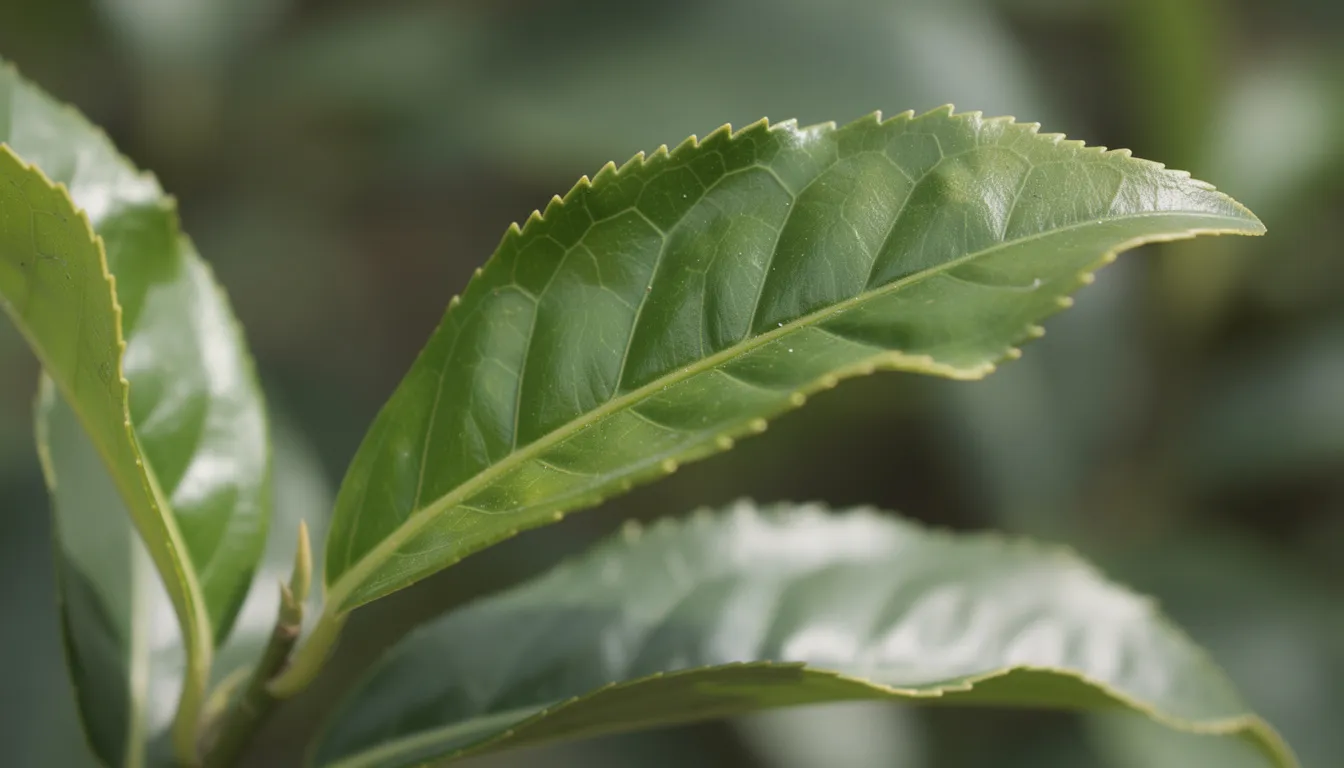
The so-called "matcha plant" is actually not an independent botanical species, but a specially cultivated variety of the tea plant Camellia sinensis. The term "matcha" comes from Japanese and refers to green tea ground into a fine powder, which is traditionally used in the Japanese tea ceremony. This evergreen plant belongs to the tea family and is the basis for all true types of tea – whether black tea, green tea, oolong, or indeed matcha.
Within green tea, matcha represents a separate category and form, as it differs significantly from other green teas due to its special production, processing, and form of consumption. Various drinks such as matcha tea and other green teas are produced from the Camellia sinensis as a refreshing and traditional beverage.
Botanical properties and characteristics of Camellia sinensis
The tea plant Camellia sinensis is a robust, evergreen shrub that can grow into a small tree under ideal conditions. Its characteristic features include:
-
Leaves: Leathery, shiny, and dark green with a fine serrated edge
-
Size: Kept at a height of 60 to 100 centimeters in plantations through regular pruning
-
Flowers: White, fragrant flowers that appear in autumn to winter
-
Fruits: Small, brown capsule fruits with oily seeds
For matcha production, however, the plants are not allowed to flower, as the focus is exclusively on leaf production.
Differences between Camellia sinensis var. sinensis and var. assamica
The species Camellia sinensis includes two main varieties that differ in their characteristics and use:
Camellia sinensis var. sinensis (China type)
-
Smaller, more delicate leaves
-
Higher tolerance for cooler climates
-
Preferred for high-quality green teas and matcha
-
Slower growth, but finer aromas
Camellia sinensis var. assamica (Assam type)
-
Larger, stronger leaves
-
Heat-loving, originally from tropical regions
-
Mainly used for black tea
-
Faster growth, higher yields
Both varieties belong to the Camellia sinensis family and are used for tea production.
For premium matcha, the var. sinensis variety is used almost exclusively, as its delicate leaves and higher content of amino acids such as L-theanine better develop the characteristic properties of matcha.
Why this specific plant is suitable for matcha production
The suitability of Camellia sinensis for matcha lies in its special ability to react to environmental changes. If the plant is shaded before harvest, it adapts its metabolism and produces:
-
Increased chlorophyll for the intense green color
-
More L-theanine for the characteristic umami flavor
-
Fewer catechins for reduced bitterness
-
Finer leaf structures for better grindability
An important similarity between matcha and other green teas like sencha is that they all come from the same plant, the Camellia sinensis.
Special cultivation methods for matcha plants
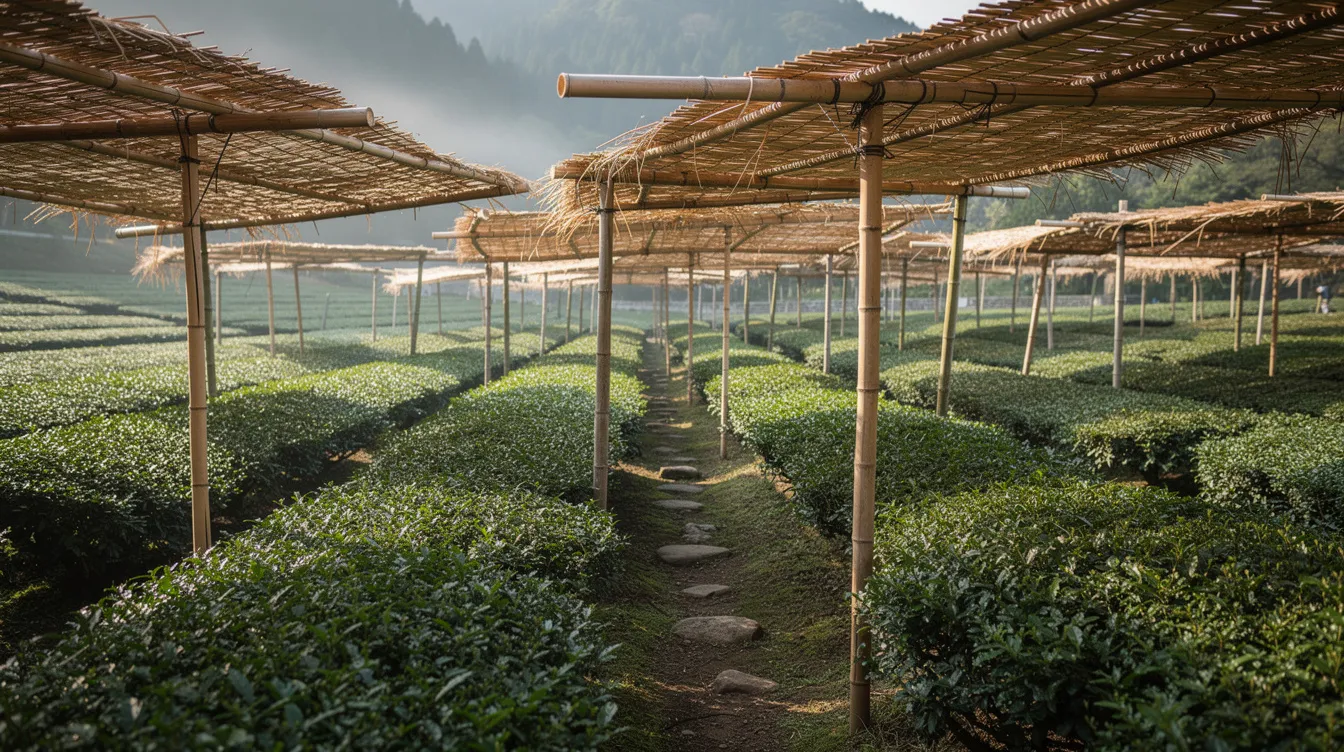
The characteristic difference between normal green tea and matcha lies in the special cultivation method of shading. This technique, called "kabuse" in Japanese, is the heart of matcha production.
In this regard, the important rule applies that certain cultivation methods and regulations must be strictly adhered to in order to ensure the high quality of the matcha plant.
The characteristic shading process (kabuse)
About 20 to 30 days before harvest, the tea plants are systematically shaded. This process occurs in several stages:
-
First week: Light shading with about 50% light reduction
-
Second to third week: Increased shading to 70-80% light reduction
-
Last week before harvest: Intensive shading of up to 90% light reduction
This gradual adaptation prevents shock to the plant and optimizes the biochemical changes.
Use of bamboo mats or black nets for shading
Traditionally, various materials are used for shading:
Traditional methods:
-
Bamboo mats (in Japanese "yoshi"): Natural materials that provide even shading
-
Rice straw mats: More cost-effective, but less durable
-
Layered arrangement: Multiple layers for precise light control
Modern methods:
-
Black netting: Synthetic materials with exact light transmittance
-
Adjustable systems: Allow flexible adjustment of shading intensity
-
Combined approaches: Mix of traditional and modern materials
How shading increases the chlorophyll and L-theanine content
Shading triggers complex biochemical reactions in the tea plant:
Due to shading, the content of valuable nutrients and antioxidants in the leaves increases significantly, as the plant reacts to the changed lighting conditions.
Chlorophyll increase:
-
Reduced light exposure leads to compensation through increased chlorophyll production
-
Result: Intensively green color of the leaves and the later matcha powder
L-theanine enrichment:
-
Sunlight normally converts L-theanine into catechins
-
Shading prevents this conversion
-
Result: Higher L-theanine content for a sweet umami flavor
Differences from normal sun-grown green tea cultivation
|
Aspect |
Matcha (shaded) |
Sencha (sun) |
|---|---|---|
|
Light exposure |
10-30% normal sun |
Full sunlight |
|
L-theanine content |
Very high |
Moderate |
|
Catechin content |
Lower |
Higher |
|
Flavor |
Sweet, umami |
Fresh, slightly bitter |
|
Color |
Vibrant green |
Light green |
|
Leaf structure |
More delicate, thinner |
More robust |
In comparison, it becomes clear that the matcha plant develops significantly different properties through shading than sencha, which grows under full sun.
Effects on leaf structure and ingredients
Shading not only changes the chemical composition but also the physical structure of the leaves:
-
Thinner cell walls: Facilitates later grinding into fine powder
-
Larger chloroplasts: Increased green pigmentation
-
More delicate texture: Better quality for ceremonial matcha
-
Reduced fiber structure: Optimal consistency after processing
Due to the special processing of the matcha plant, many more valuable ingredients are preserved than in other green teas.
Optimal growing conditions for matcha plants
The cultivation of high-quality matcha plants requires very specific climatic and geographical conditions. These factors significantly determine the quality of the later matcha powder.
Climatic requirements: Temperature, humidity, and precipitation
Temperature requirements:
-
Ideal range: 13-18°C annual average
-
Minimal temperature fluctuations between day and night
-
Protection against late frost during the spring harvest season
-
Mild winters without extreme cold periods
Humidity:
-
High relative humidity of 70-85%
-
Frequent fog formation, especially in the morning hours
-
Constant humidity without waterlogging
-
Natural irrigation through atmospheric moisture
Precipitation patterns:
-
Annual precipitation: 1,200-2,000mm
-
Even distribution throughout the year
-
Sufficient moisture during growth periods
-
Avoidance of dry periods during critical development phases
Soil quality and pH requirements
The matcha plant thrives best in specific soil conditions:
pH range:
-
Optimal: pH 5.0 - 6.0 (slightly acidic)
-
Allows optimal nutrient uptake
-
Supports the development of desired flavor profiles
Soil composition:
-
Drainage: Well-draining, yet water-retaining
-
Texture: Loamy-sandy mixture ideal
-
Organic substance: Rich in humus and organic material
-
Nutrient content: High nitrogen content for amino acid development
Altitude and geographical conditions
Ideal altitudes:
-
200-800 meters above sea level
-
Higher altitudes often offer better aroma development
-
Altitude and terroir significantly influence the aroma of matcha tea, as they provide characteristic flavor nuances.
-
Protection against extreme temperature fluctuations
-
Natural fog formation at suitable altitudes
Geographical factors:
-
Slope: Preferred for natural drainage
-
Wind protection: Protection against strong winds
-
Sunlight: Controlled light exposure
-
Water access: Natural springs or controlled irrigation
Seasonal growth cycles and harvest times
The matcha plant follows a precise seasonal rhythm:
Spring (March-May):
-
Ichibancha: First and most valuable harvest
-
Highest concentration of L-theanine and amino acids
-
Basis for ceremonial premium matcha
Early summer (June-July):
-
Nibancha: Second harvest
-
Used for premium qualities - ideal for matcha latte & co
Autumn (September-October):
-
Sanbancha: Third harvest
-
Mainly for culinary matcha
The first harvest (Ichibancha) is crucial for the highest matcha quality, as the plant has concentrated energy and nutrients in the young shoots over the winter.
Japanese cultivation regions in detail
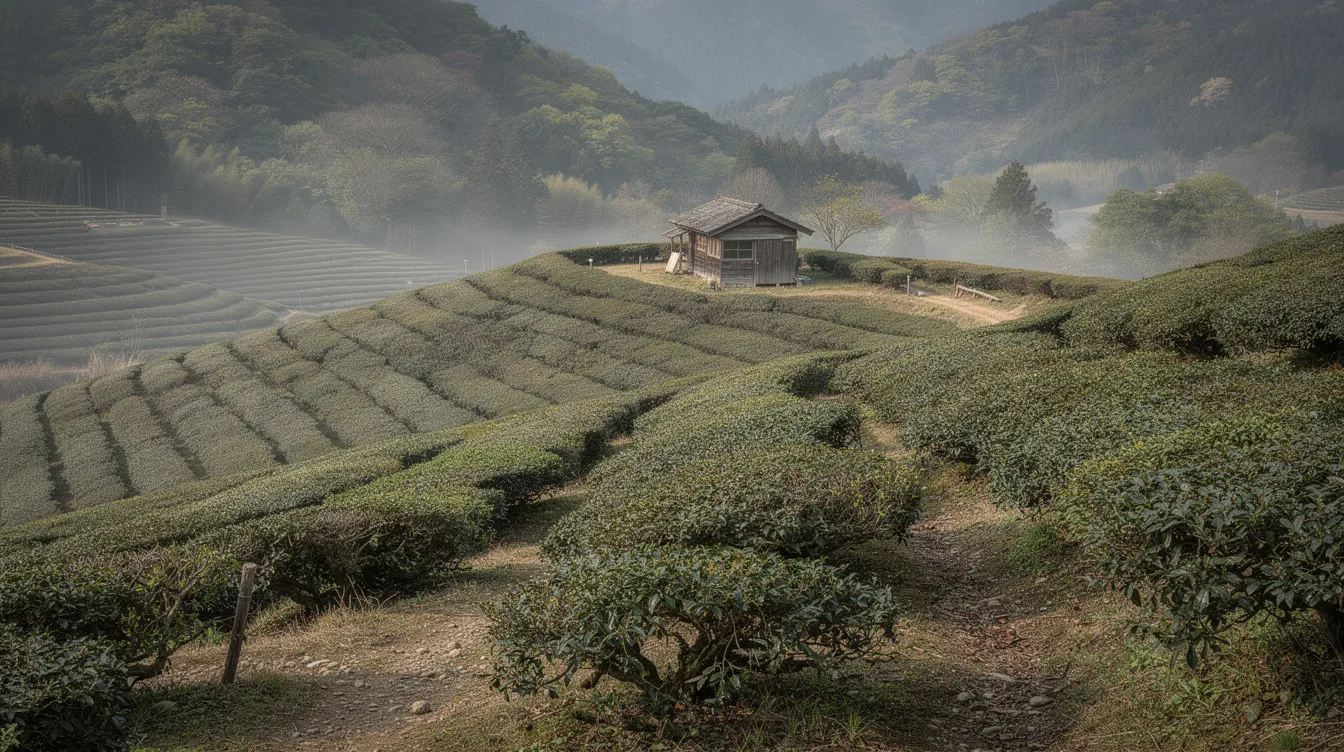
Japan is home to the world's most renowned matcha cultivation regions, each with its own characteristic terroir properties.
Further information on the most important tea cultivation areas in Japan can be found on this page.
Uji (Kyoto Prefecture) - the traditional heart of matcha production
Uji is considered the cradle of Japanese matcha and has been home to the most prestigious tea gardens for over 400 years:
Historical significance:
-
First matcha plantations as early as the 13th century
-
Center of the traditional tea ceremony
-
Origin of many historical matcha cultivars
Climatic characteristics:
-
Mild temperatures due to protected valley location
-
Frequent morning mist from the nearby Uji River
-
Ideal humidity for tea plant development
Terroir characteristics:
-
Complex, sweet taste with distinct umami
-
Particularly fine, silky texture
-
Intense, bright green color
Miyazaki (Miyazaki Prefecture) – emerging tea region in southern Japan
Miyazaki Prefecture on the island of Kyushu is one of Japan's innovative tea-growing regions and is particularly known for high-quality green tea as well as modern, sustainable cultivation methods.
Production volume:
-
Production of Sencha, Kamairicha, and increasingly also raw Matcha tea (Tencha)
-
Focus on high-quality green tea and specialties
-
Growing importance in Japanese tea exports
Climate and terroir:
-
Warm, subtropical climate in southern Japan
-
Sufficient rainfall ensures vigorous plant growth
High solar radiation and fertile volcanic soils
Quality characteristics:
-
Fresh, aromatic green tea with clear plant structure
-
Often a slightly stronger aroma than tea from cooler regions
-
Modern cultivation methods combined with traditional processing
Shizuoka - significant region at the foot of Mount Fuji
The volcanic soils around Mount Fuji offer unique conditions for tea cultivation:
Geological advantages:
-
Nutrient-rich volcanic soils
-
Excellent drainage due to volcanic rock
-
Mineral richness for complex flavor profiles
Climatic conditions:
-
Protection by the mountainous landscape
-
Cool morning mists from Mount Fuji
-
Stable temperatures due to elevation
Kagoshima (Kyushu) - southernmost Matcha growing region
The southernmost Matcha region in Japan benefits from a subtropical climate:
Climate characteristics:
-
Longer growing periods
-
Higher temperatures allow for earlier harvests
-
Intense solar radiation requires careful shading
Production specifics:
-
Often three harvests per year possible
-
Modern cultivation techniques and automation
-
Focus on sustainable organic farming
Climatic features of each region and their influence on quality
Each region develops characteristic Matcha profiles due to its specific microclimate:
|
Region |
Temperature |
Humidity |
Flavor profile |
Features |
|---|---|---|---|---|
|
Uji |
Mild, stable |
Very high |
Complex, sweet, umami |
Traditional methods |
|
Miyazaki |
Warm |
High |
Fresh, slightly sweet |
Innovative cultivation methods |
|
Shizuoka |
Cool |
Medium-high |
Fresh, mineral |
Volcanic soils |
|
Kagoshima |
Warm |
Medium |
Strong, full-bodied |
Longer season |
Care and cultivation of Matcha plants
The successful cultivation of Matcha plants requires a combination of traditional knowledge and modern farming methods. The Matcha plant is an important part of Japanese culture and a sustainable lifestyle. The type of care significantly determines the subsequent quality of the Matcha powder.
Traditional Japanese cultivation methods since the 12th century
The foundations of Matcha cultivation are based on centuries-old traditions:
Historical development:
-
Introduction by Buddhist monks in the 12th century
-
Perfection during the Muromachi period (1336-1573)
-
Integration into the culture of the tea ceremony
-
Passing on of knowledge through generations of tea farmers
Traditional principles:
-
Respect for the tea plant's natural cycles
-
Minimal intervention in natural processes
-
Long-term soil care without synthetic additives
-
Manual labor for critical production steps
Modern organic farming procedures without pesticides
Modern Matcha producers combine traditional wisdom with sustainable cultivation methods:
Biological pest control:
-
Use of beneficial insects like spiders and beetles
-
Development of stable ecosystems in the plantations
-
Preventive measures through plant strengthening
-
Natural defense substances through optimized nutrition
Certified organic cultivation methods:
-
JAS organic certification (Japan Agricultural Standards)
-
Complete avoidance of synthetic pesticides
-
Regular inspections and documentation
-
Three- to five-year transition period for conversion from conventional to organic Matcha
Fertilization and soil management for optimal nutrient supply
The nutrient supply of the Matcha plant is crucial for the L-theanine content:
Nitrogen supply:
-
Organic nitrogen sources such as rapeseed cake
-
Controlled application to promote amino acids
-
Timing coordinated with growth phases
-
Balance between yield and quality
Soil care:
-
Composting of organic materials from the region
-
Mulching for moisture protection and nutrient supply
-
Gentle soil cultivation to protect roots
-
pH monitoring and natural regulation
Pruning and shaping of tea bushes
Proper pruning is essential for consistent leaf quality:
Shaping:
-
Maintenance of a uniform picking height of 60-100 cm
-
Promotion of dense leaf development
-
Removal of old and diseased branches
-
Optimization of light distribution within the plant
Timing of pruning:
-
Main pruning after the final autumn harvest
-
Minor corrections in early spring
-
Avoidance of pruning before the important spring harvest
Protection against pests and diseases
Healthy Matcha plants are the foundation for high-quality tea:
Common challenges:
-
Thrips and spider mites in dry weather
-
Fungal diseases during high humidity
-
Aphids during growth periods
Preventive measures:
-
Strengthening plants through optimal nutrition
-
Promoting air circulation through correct pruning
-
Crop rotation and mixed cultivation
-
Regular inspections and early intervention
From the Tencha plant to Matcha powder
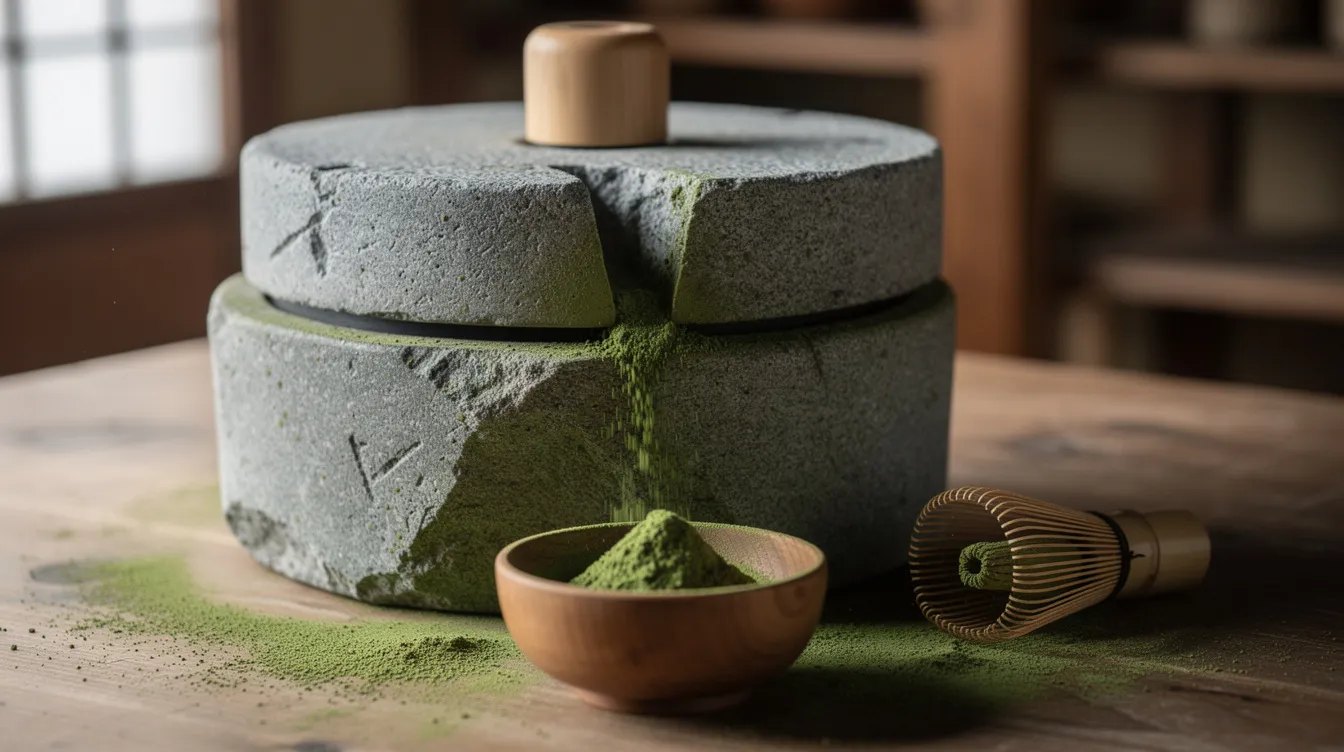
The path from the shaded Matcha plant to the finished powder is a complex process that requires extreme precision. The spread of Matcha in Japan was historically driven by Zen monks and samurai, who significantly contributed to its establishment in various social and cultural circles. Each step has a significant impact on the final quality of the Matcha.
In Japan, Matcha continued to evolve, becoming a symbol of mindfulness and meditation. The Japanese tea ceremony, known as Chanoyu, plays a central role in the culture and focuses on harmony, respect, and mindfulness. During preparation, meditative thoughts and concentration are prioritized, turning the tea ceremony into a moment of inner peace and reflection.
In the Japanese tea ceremony, Matcha is traditionally whisked into a froth in warm water using a bamboo whisk. A Matcha bowl and a bamboo whisk are usually used for preparation. It is important to use hot, but not boiling, water. Unlike preparing regular green tea, Matcha is mixed directly into the water rather than being steeped.
What are Tencha leaves and how do they differ from other tea leaves
Tencha is the intermediate product between the fresh Matcha plant and the finished powder:
Definition and characteristics:
-
Dried but unrolled leaves from shaded tea plants
-
Exclusive use of the soft leaf material
-
Removal of all stems and leaf veins
-
Flat, brittle structure in contrast to rolled Sencha leaves
Differences from other tea leaves:
|
Tea type |
Processing |
Structure |
Use |
|---|---|---|---|
|
Tencha |
Steamed, dried |
Flat, brittle |
Matcha production |
|
Sencha |
Steamed, rolled |
Needle-shaped |
Steeped tea |
|
Gyokuro |
Steamed, rolled |
Needle-shaped, dark |
Premium steeped tea |
Manual harvesting of the youngest leaf tips in spring
Harvesting the Matcha plant requires the utmost care:
Ichibancha harvest (First spring harvest):
-
Only the two top leaves and the bud
-
Hand-picked for highest quality grades
-
Harvested in the early morning hours
-
Immediate processing within a few hours
Selection criteria for premium quality:
-
Leaf size: Small and tender
-
Color: Dark green due to shading
-
Texture: Soft and flexible
-
Timing: Optimally developed but still young leaves
Steaming process to stop oxidation
The steaming process is crucial for preserving the green color and the nutrients:
Technical details:
-
Steaming duration: 20-40 seconds at high temperatures
-
Immediate inactivation of polyphenol oxidase
-
Preservation of chlorophyll content
-
Retention of water-soluble vitamins
Quality control:
-
Uniform steam distribution
-
Precise temperature control
-
Monitoring of steaming duration
-
Immediate cooling after steaming
Removal of stems and leaf veins
Cleaning the steamed leaves requires precision:
Manual sorting:
-
Removal of all woody parts
-
Sorting out damaged leaves
-
Retaining only the softest leaf tissue
-
Quality control in several rounds
Modern sorting methods:
-
Airflow separation for initial coarse cleaning
-
Sieving by particle size
-
Optical sorting for final purity
-
Combination of manual and machine processing
Drying Tencha leaves before grinding
Gentle drying is crucial for storage and subsequent grinding:
Drying methods:
-
Hot air drying at controlled temperatures
-
Avoidance of overheating to protect aromas
-
Uniform moisture distribution
-
Final moisture content of about 3-5%
Storage of Tencha leaves:
-
Cool, dry environment
-
Protection from light and oxygen
-
Monitoring of air humidity
-
Regular quality monitoring
Quality differences in Matcha plants
The quality of Matcha is determined by various factors that begin as early as the cultivation of the plant.
Compared to Matcha, Sencha contains a higher level of vitamin C, which highlights this green tea as a particularly good source of vitamins.
Age of the tea plants and its influence on Matcha quality
The age of the Matcha plant plays a crucial role in quality development:
Young plants (1-5 years):
-
High vitality, but less complex aromas
-
Lower L-theanine content
-
Used primarily for culinary matcha
-
Simpler flavor profiles
Mature plants (6-20 years):
-
Optimal balance between yield and quality
-
Highest L-theanine concentration
-
Basis for premium ceremonial matcha
Complex, multi-layered aromas
Old plants (over 20 years):
-
Deep, complex flavor profiles
-
Lower yields, but highest quality
-
Special terroir characteristics
-
Often reserved for limited specialties
Differences between ceremonial and culinary quality
The use of the matcha plant determines different quality categories:
Ceremonial Grade:
-
Exclusively Ichibancha from mature plants
-
Hand-picking of the most tender leaves
-
Stone grinding for finest particle size
-
Bright green color and sweet umami taste
-
Direct preparation without further additives
Culinary Grade:
-
Blend of different harvests
-
Machine harvesting and processing
-
Coarser grinding for cost-efficiency
-
Slightly bitter taste that works well in milk and sweets
-
Optimized for processing in food products
First harvest (Ichibancha) vs. later harvests
The harvest time of the matcha plant fundamentally determines the quality:
Ichibancha (First harvest, March-May):
-
Highest concentration of L-theanine and amino acids
-
Accumulated nutrients from winter dormancy
-
Tenderest leaves with the most intense green color
-
Basis for all premium matcha qualities
Nibancha (Second harvest, June-July):
-
Reduced amino acid content
-
Harder leaf structure due to sun exposure
-
Used for standard and premium qualities
-
Significantly lower prices
Sanbancha (Third harvest, September-October):
-
Lowest quality level
-
Primarily for culinary or industrial applications
-
High catechin content, bitter taste
-
Rarely used for traditional matcha
Leaf position on the tea bush and quality grades
The position of the leaves on the matcha plant significantly influences the quality:
Top leaves and bud:
-
Highest L-theanine concentration
-
Tenderest structure
-
Used for the highest quality grades
-
Most intense green pigmentation
Second and third leaf:
-
Good balance between quality and yield
-
Standard for mid-range quality grades
-
Balanced nutrient profiles
Lower and older leaves:
-
Higher fiber content
-
Bitterer taste components
-
Used for culinary purposes
-
More cost-effective production
Sustainable agriculture and environmental aspects
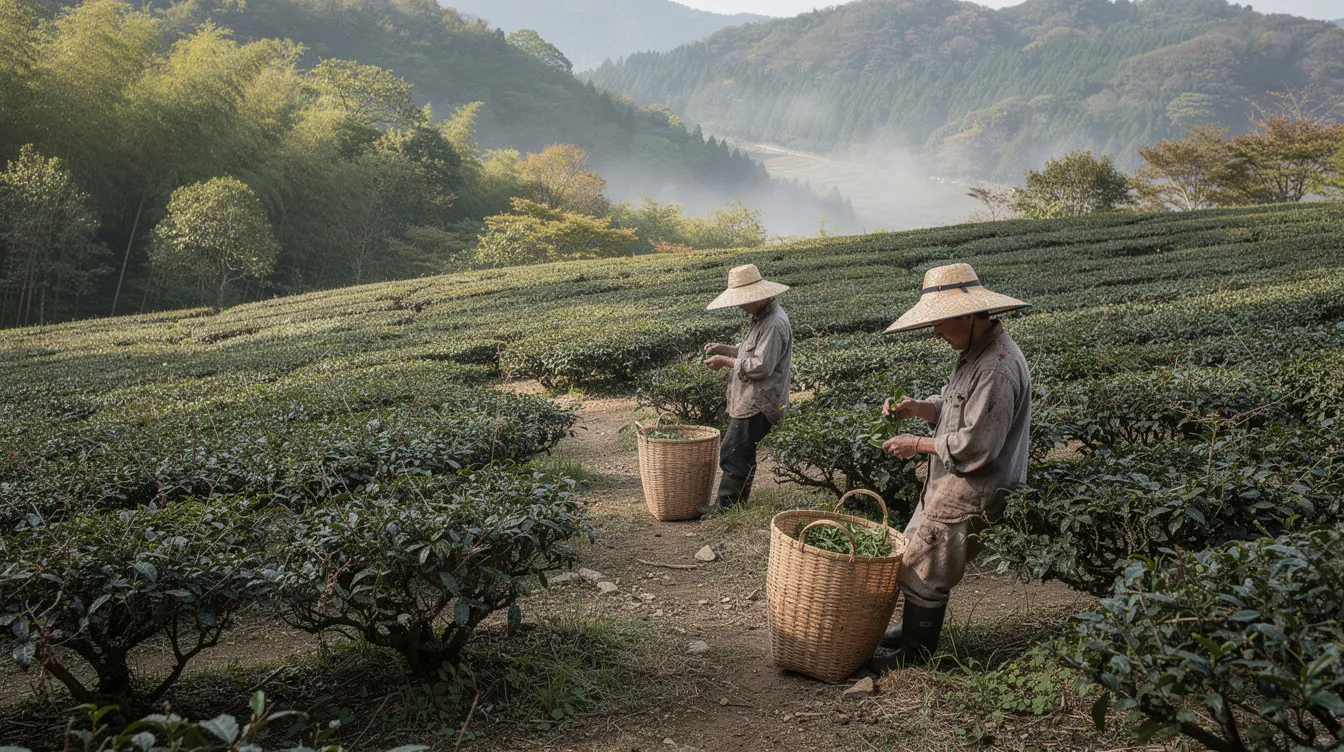
Sustainable cultivation of the matcha plant is becoming increasingly important, both for environmental protection and for the long-term quality of production.
Traditional farming methods as a basis for sustainability
The centuries-old traditions of matcha cultivation already contain many sustainable principles:
Natural circular economy:
-
Use of organic waste from tea plants as compost
-
Minimal external inputs through optimized nutrient cycles
-
Long-term soil fertility through careful management
-
Integration of the matcha plant into local ecosystems
Biodiversity in tea gardens:
-
Preservation of native plant species between the tea rows
-
Promotion of natural beneficial insects
-
Minimal soil cultivation to protect soil life
-
Creation of habitats for local wildlife
Organic farming and certifications
Modern organic certifications ensure the highest standards for the matcha plant:
JAS Organic Standard (Japan Agricultural Standards):
-
Complete avoidance of synthetic pesticides and fertilizers
-
Three- to five-year transition period for conversion
-
Regular inspections by independent bodies
-
Documentation of all production steps
International organic certifications:
-
EU organic regulation for European markets
-
USDA Organic for North American markets
-
Additional standards for fair trade
-
Transparent supply chains from cultivation to consumer
Water management and soil conservation in matcha plantations
Sustainable use of natural resources is essential:
Water-efficient management:
-
Efficient irrigation systems with drip irrigation
-
Collection and use of rainwater
-
Avoidance of water waste
-
Protection of local water sources from contamination
Soil protection and conservation:
-
Prevention of erosion through hillside management
-
Building of organic soil substance
-
Minimization of heavy machinery use
-
Preservation of natural soil structure
Support for local farmers and communities
Sustainable matcha production supports local communities:
Social sustainability:
-
Fair prices for traditional tea farmers
-
Preservation of traditional cultivation methods and knowledge
-
Support for the local economy
-
Creation of long-term jobs in rural areas
Knowledge transfer:
-
Training of young farmers in sustainable methods
-
Research collaborations between universities and producers
-
International networking for best-practice exchange
Effects of climate change on matcha cultivation
Climate change poses new challenges for the matcha plant:
Observed changes:
-
Shifting of optimal harvest times
-
More frequent extreme weather events
-
Altered precipitation patterns
-
New pests and diseases
Adaptation strategies:
-
Development of climate-resilient tea plant varieties
-
Optimization of shading systems for changing light conditions
-
Adaptation of irrigation strategies
-
Diversification of cultivation regions
Recognizing high-quality matcha plants and products
Matcha has taken a firm place in the repertoire of tea lovers. The ability to recognize quality differences in matcha begins with an understanding of the underlying plant quality and processing standards.
Characteristics of matcha from high-quality plants
High-quality matcha is characterized by distinct properties that are directly attributable to the quality of the matcha plant used:
Visual impression:
-
Bright emerald to neon green color
-
Extremely fine, uniform powder without visible particles
-
No yellowish or brownish discoloration
-
Matte, shiny surface without a dull or dusty appearance
Texture and feel:
-
Silky, almost creamy consistency when whisked
-
No grainy or sandy texture
-
Uniform distribution in water without clumping
-
Foam formation when traditionally whisked with a chasen; a creamy, firm foam is considered a sign of high-quality matcha.
Color intensity and texture as quality indicators
Color is the most important visual indicator of matcha quality:
Color spectrum by quality grade:
|
Quality grade |
Hue |
Chlorophyll content |
Cultivation method |
|---|---|---|---|
|
Ceremonial |
Bright neon green |
Very high |
Optimally shaded |
|
Premium |
Rich green |
High |
Well shaded |
|
Culinary |
Olive green |
Medium |
Moderately shaded |
|
Industrial |
Yellowish-green |
Low |
Lightly shaded |
Texture features:
-
Particle size: Premium matcha has a particle size of 5-10 micrometers
-
Flowability: High-quality powder flows evenly without clumping
-
Solubility: Easy suspension in water without residue
Flavor profile of premium matcha from top-class plants
The taste directly reflects the quality of the matcha plant and its handling:
Characteristic flavor notes:
-
Umami: Intense taste due to high L-theanine content
-
Sweetness: Natural sweetness without artificial additives
-
Vegetal: Fresh, grassy notes without bitterness
-
Creaminess: Full-bodied texture in mouthfeel
Flavor defects in inferior quality:
-
Pronounced bitterness due to high catechin content
-
Dusty or earthy aftertaste
-
Lack of complexity and depth
Origins and quality seals
Authentic origin information is crucial for quality assurance:
Renowned origin regions:
-
Uji, Kyoto: Traditional prestige area
-
Miyazaki: Modern cultivation methods combined with traditional processing
-
Shizuoka: Volcanic soil terroir
-
Kagoshima: Modern organic production
Important quality seals:
-
JAS Organic (Japan Agricultural Standards)
-
Fair Trade Certification
-
EU Organic Label
-
Traditional Craftsmanship Awards
What to look for when buying matcha
For tea lovers and consumers, the following factors are decisive:
Packaging and storage:
-
Light-impermeable, airtight packaging
-
Indication of harvest date and shelf life
-
Cold storage recommended (below 10°C)
-
Avoidance of large packages for private use
Product information:
-
Precise origin information down to the region
-
Information about shading duration
-
Harvest time (Ichibancha preferred)
-
Processing method (stone mill preferred)
Pricing as a quality indicator:
-
Ceremonial Matcha: 25-50€ per 30g
-
Premium Quality: 20-25€ per 30g
-
Culinary Matcha: 15-20€ per 100g
-
Suspiciously low prices indicate inferior quality
The future of matcha plant cultivation
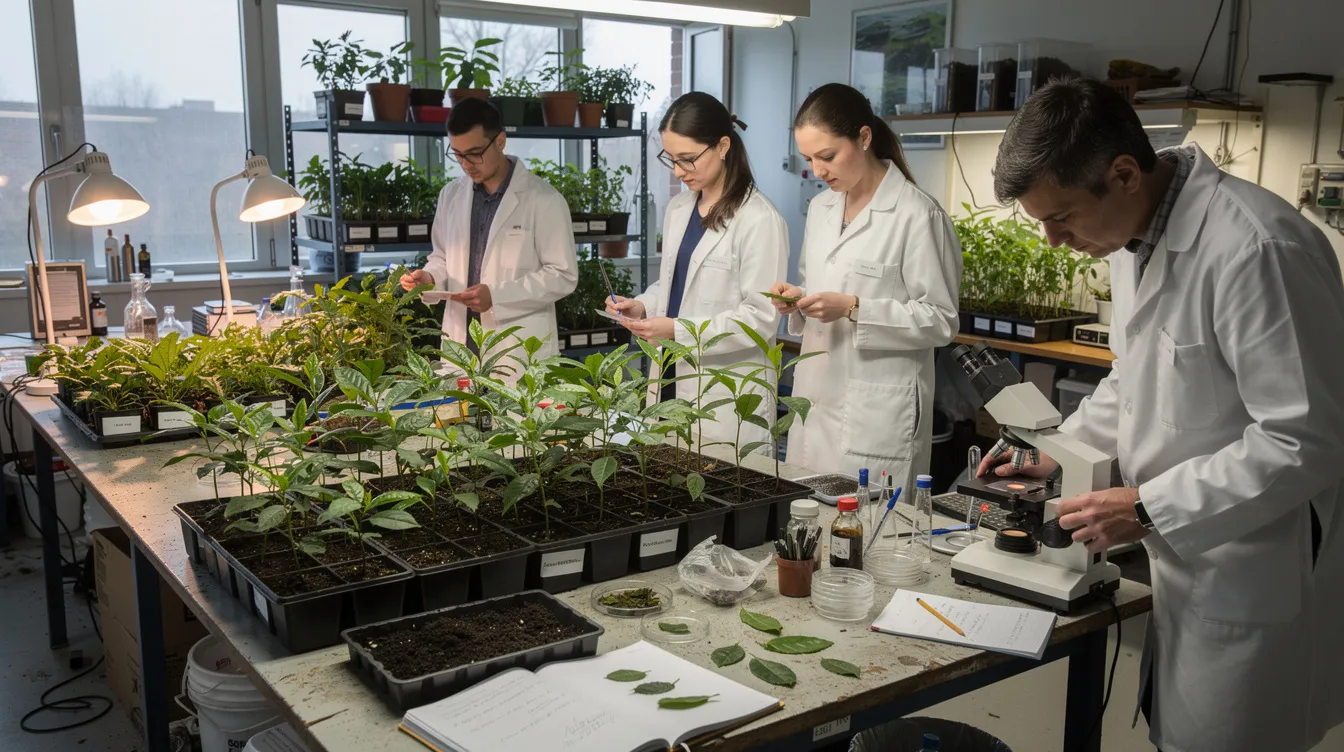
The future of matcha plant cultivation lies in the tension between preserving centuries-old traditions and the requirements of a changing world.
Modern research on optimizing cultivation methods
Scientific research contributes to the continuous improvement of matcha quality:
Biochemical research:
-
Precise analysis of L-theanine formation under various shading conditions
-
Optimization of nutrient supply for maximum amino acid content
-
Investigation of chlorophyll metabolism in shaded plants
-
Development of new methods for quality measurement
Cultivation-technical innovations:
-
Sensor-controlled shading systems
-
Precision fertilization based on soil analysis
-
Optimized irrigation strategies
-
Integrated pest management systems
Developing new tea plant varieties for better matcha quality
Breeding new cultivars promises further quality improvements:
Breeding goals:
-
Higher L-theanine production in the leaves
-
Improved resistance to climate stress
-
Optimized response to shading
-
More uniform leaf quality
Modern breeding methods:
-
Marker-assisted selection for desired traits
-
Genomic analyses for identifying quality genes
-
Crossbreeding between traditional and new varieties
-
Preservation of genetic diversity
Impact of technology on traditional cultivation methods
Modern technology complements traditional knowledge:
Digital monitoring:
-
IoT sensors for climate and soil monitoring
-
Drones for crop monitoring and harvest planning
-
Artificial intelligence for disease detection
-
Precise control of environmental conditions
Preservation of traditional methods:
-
Documentation of traditional knowledge through modern media
-
Combination of manual labor and technical support
-
Quality standards that prioritize traditional procedures
-
Training young farmers in proven techniques
Global expansion of matcha cultivation outside of Japan
Growing global demand is leading to cultivation trials in new regions:
Potential cultivation areas:
-
Korea: Climatic conditions similar to Japan
-
Taiwan: Experience with high-quality tea cultivars
-
Southern United States: Experiments with Camellia sinensis
-
New Zealand: Controlled cultivation conditions
Challenges with expansion:
-
Reproduction of specific terroir characteristics
-
Availability of suitable Camellia sinensis cultivars
-
Development of the required processing expertise
-
Establishing infrastructure for traditional stone mills
Challenges and opportunities for matcha producers
The future brings both opportunities and challenges:
Current challenges:
-
Climate change and changing growth conditions
-
Aging farmers and a lack of new talent
-
Price pressure due to international competition
-
Preservation of authentic quality standards
-
Growing global demand for premium matcha
-
Interest in sustainable and organic products
-
Technological support for better efficiency
-
Opportunities for premium positioning and direct marketing
Strategies for sustainable success:
-
Investment in training and promoting new talent
-
Balance between tradition and innovation
-
Focus on quality over quantity
-
Building direct relationships with consumers
The future of matcha plant breeding lies in the intelligent combination of traditional wisdom with modern findings and technologies. The quality of the Camellia sinensis and its careful cultivation remains the foundation for exceptional matcha.
Conclusion
The matcha plant, scientifically known as Camellia sinensis, is far more than just an ordinary tea plant. Matcha is primarily valued for its comprehensive ingredients and diverse benefits, which set it apart from other types of tea. Through centuries-old Japanese cultivation traditions, precise shading techniques, and careful cultivation, its leaves provide the basis for one of the most valuable beverages in the world.
The special cultivation of the matcha plant—from the characteristic shading and optimal growth conditions to the gentle processing into Tencha leaves—is what makes the fundamental difference between ordinary green tea and premium matcha. Matcha contains a particularly high level of antioxidants and caffeine, which further emphasizes its positive effects on health and concentration. The combination of L-theanine-rich amino acids, intense chlorophyll content, and the unique umami note is only created through these specialized cultivation methods.
For tea lovers, understanding the matcha plant and its cultivation means having the ability to recognize and appreciate true high quality. When consuming matcha, the entire tea leaf is ingested in powder form, allowing all valuable nutrients to be utilized fully. Whether in the traditional Japanese tea ceremony or in modern culinary applications, the quality of the underlying plant and its treatment ultimately determines the taste, color, and health benefits of the finished matcha powder.
The future of matcha plant culture lies in preserving traditional methods while simultaneously adapting to modern challenges such as climate change and sustainable agriculture. The matcha bowl plays a central role in traditional preparation, as it allows for adding the powder and whisking it into a fine foam. For consumers, appreciating the elaborate cultivation process and consciously choosing high-quality products remains the best way to support this unique tradition.
